
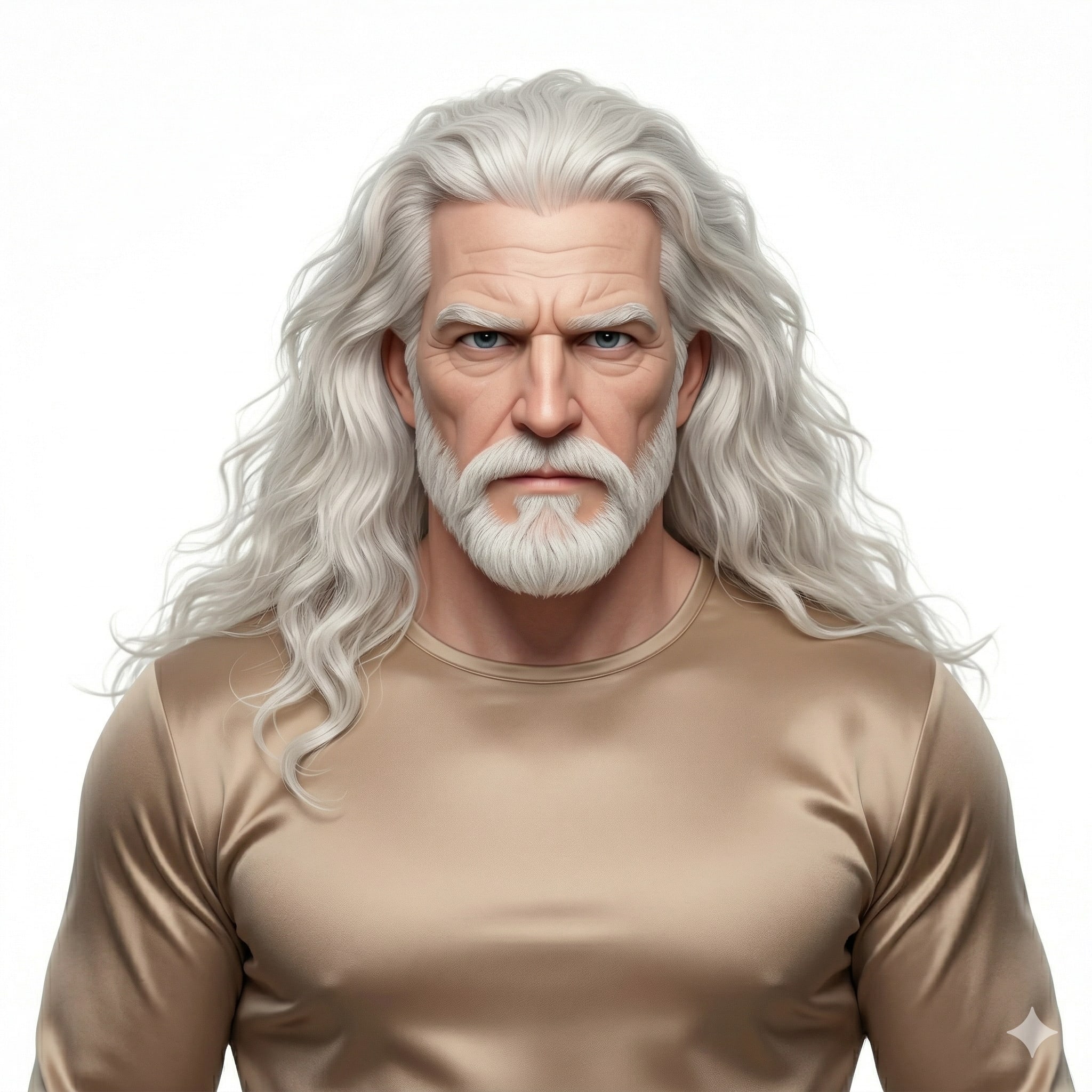
Zal (زال)
Born with white hair, which in most families would just mean “interesting genetics,” but here gets him abandoned by his father  Sam. So infant Zal is left on a mountain like an inconvenient package. Enter
  Simurgh, who decides, fine, I’ll raise the kid myself. And just like that, Zal grows up on Mount Alborz under the care of a mythical bird, which somehow turns out better than his original parenting situation.
He becomes a great warrior, because of course he does. Then he hears about  Rudabeh, a princess of Kabul, famed for her beauty. They fall in love before even meeting, which is either poetic or just very efficient. Eventually they do meet, the drama escalates, and after enough resistance from basically everyone, they get married.
The main objection comes from Sam, who suddenly remembers he has standards. Rudabeh]happens to be a descendant of  Zahak, the guy with the shoulder snakes and a thousand-year resume of horror. Not exactly reassuring in-law material. So Sam consults his astrologers, because when in doubt, outsource your judgment to the stars.
The astrologers come back with a glowing review: their child won’t be a monster. In fact, he’ll be the greatest hero in Persian history, protector of the Iranian crown. That child is  Rostam. No pressure.
Zal lives for over 300 years, which sounds like a gift until you realize it just gives him more time to watch everything go wrong. In his old age, he witnesses the death of Rostam, killed not by some legendary foe, but by his half-brother  Shaghad. After surviving demons, wars, and fate itself, that’s how it ends. Petty betrayal wins again.
As if that wasn’t enough, along comes  Bahman, son of
  Esfandiyar, carrying a grudge and apparently nothing better to do. He throws Zal in prison as revenge for his father’s death. Because imprisoning a centuries-old grieving man really shows strength of character.
Eventually, Bahman’s own uncle, steps in and calls out the whole situation for what it is: bullying someone who’s already lost everything. Bahman relents, releases Zal, and withdraws.
Zal returns to ruling, because apparently retirement is not an option in this universe. After centuries of abandonment, love, war, prophecy, and loss, he finally dies a natural death.
Which, in this story, is practically a miracle.
Parents
Grandparents

Spouse
Children