
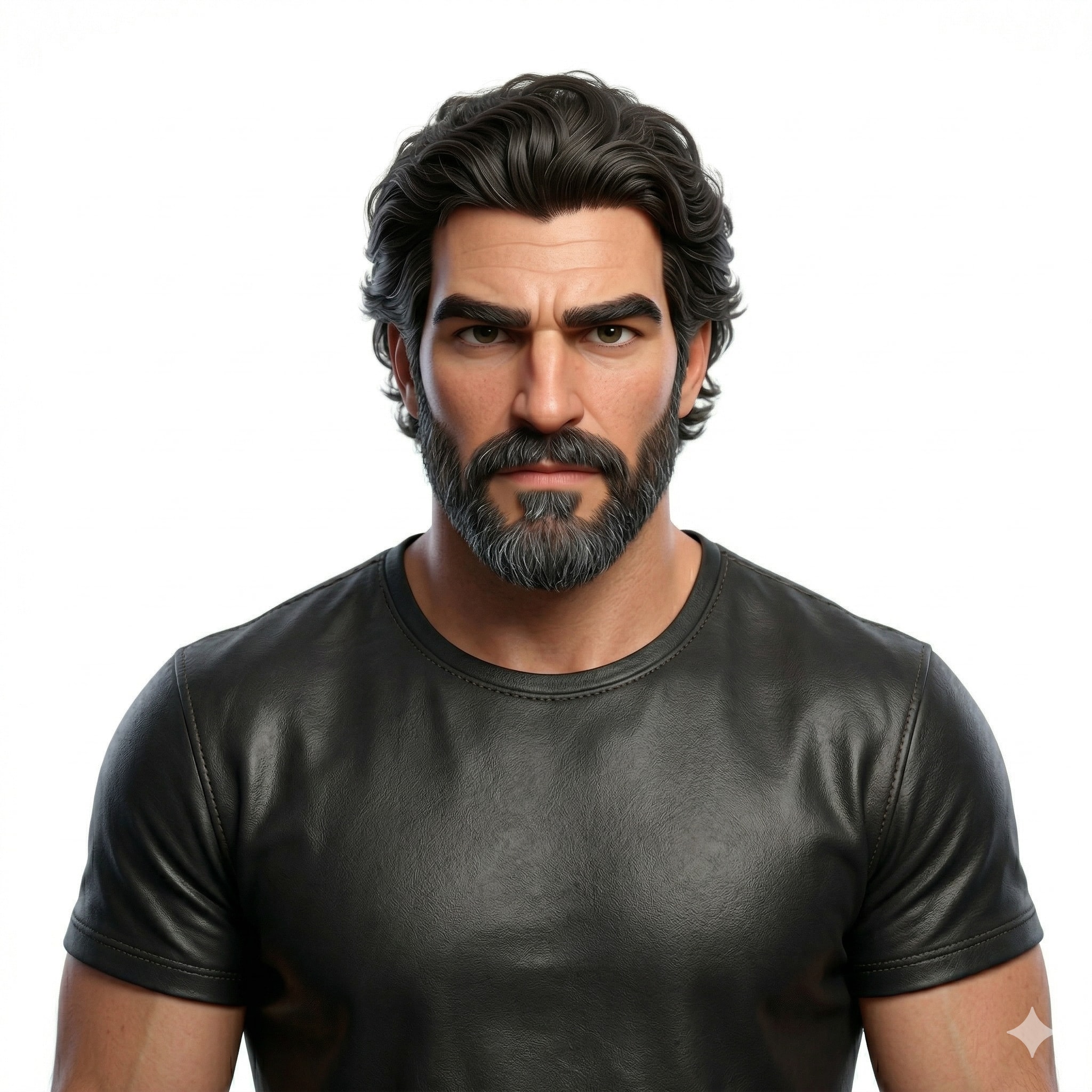
Shaghad (شغاد)
Shaghad, son of  Zal and a slave girl, which in this story is less a detail and more a warning label. Half-brother to
  Rostam, born into a family where greatness is expected and resentment grows in the corners.
Astrologers look at his birth and immediately predict he will destroy the line of  Sam. Not “might cause trouble.” Not “keep an eye on him.” Straight to “this ends badly for everyone involved.” And somehow, instead of preventing that outcome, everyone just… continues.
He’s sent to the King of Kabul, learns court life, marries into power. On paper, this is upward mobility. In practice, it just gives him proximity to the one thing he can’t stand: Rostam’s reputation.
Because Rostam isn’t just stronger. He’s inevitable. And living in that shadow does something to a person.
When Rostam demands tribute from Kabul, Shaghad takes it personally. Not politically. Personally. Jealousy finally finds a plan.
He conspires with the King of Kabul. Together, they prepare a hunting ground filled with hidden pits lined with poisoned spears. Not a duel. Not a confrontation. A trap. Because direct conflict would require courage, and this is something else entirely.
Rostam arrives. So does  Rakhsh. They fall into one of the pits.
That’s it. After a lifetime of defeating monsters, armies, and fate itself, Rostam is taken down by a hole in the ground and a relative with unresolved issues.
Both Rostam and Rakhsh are mortally wounded.
Rostam realizes what’s happened. There’s no recovery, no miracle waiting. Just time, and not much of it.
So he asks Shaghad for a bow and two arrows. Says he needs to defend himself from lions while dying. A final request, reasonable enough to not raise suspicion, or maybe Shaghad just wants to believe it’s already over.
Shaghad agrees, but hides behind a sycamore tree. Even now, he’s afraid. Which says everything.
Rostam, impaled, dying, still manages one last act.
He draws the bow and fires. The arrow goes through the tree. Through the trunk. Through the cover Shaghad trusted. And into Shaghad himself, pinning him there.
Shaghad dies first.
Rostam follows shortly after.
So the prophecy completes itself. Not with a grand war, not with destiny unfolding in the open, but with betrayal, fear, and one final shot that proves something stubborn and almost comforting:
Even at the end, Rostam doesn’t go quietly.
And Shaghad, for all his planning, still ends up exactly where stories like this always place him.
On the wrong side of the last moment.
Parents
Grandparents
Siblings